What this site is
Housing is a slow, lumpy, illiquid market, and almost everything odd about it follows from that
This is a reference about housing and place, written from first principles. It explains how a local housing market behaves, which forces actually move prices, what happens mechanically when a home is bought or sold, what surveys and legal searches do and do not cover, how a mortgage works as an instrument, how renting and owning genuinely compare, and why neighbourhoods look and feel the way they do.
The pages are deliberately general. Nothing here concerns any particular property, and nothing here is advice about an individual purchase, sale, mortgage or legal question — those decisions belong with the people making them and the professionals they instruct. What this site offers instead is the underlying structure, so that advice, listings and headlines are easier to read critically.
Start anywhere. If you are new to the subject, the two market pages below explain the mechanics that the rest of the site assumes.
From the notebook
More
The market, first
How a local housing market actually works
The stock of housing is enormous and the number of homes changing hands in any month is tiny. Prices are therefore set at the margin, by a handful of transactions that happen to complete, which is why a street can appear to reprice on very thin evidence and why markets seize rather than fall smoothly.
Four numbers get called “the price” — asking, offer, agreed and achieved — and most public confusion comes from comparing one with another. Chains, which link most sales to most purchases, explain the rest.
Then the forces
What moves prices, and on what timescale
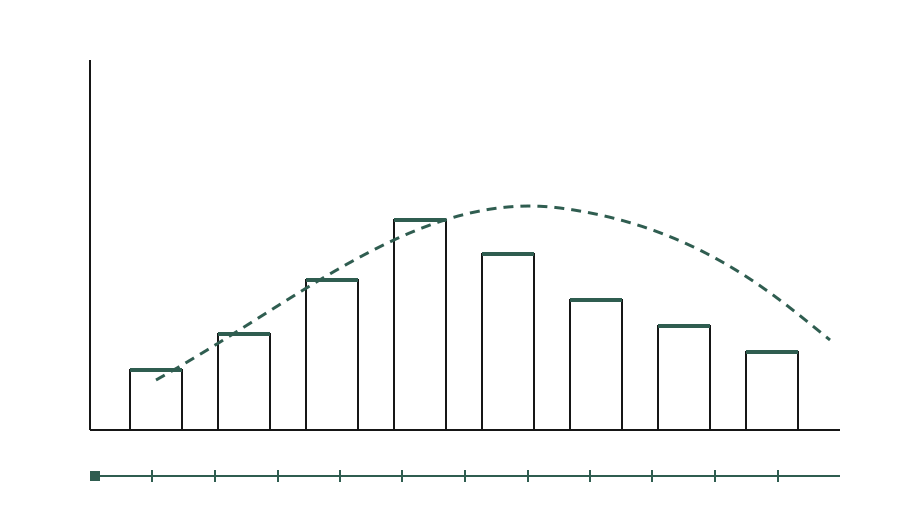
Credit conditions move first and fastest, because most homes are bought with borrowed money. Employment and wages set who can enter at all. Willingness of existing owners to sell determines visible supply far more quickly than building does. Planning decisions reprice land years ahead of any construction, transport access reprices time rather than distance, and seasonality quietly distorts every comparison made carelessly.
Then the mechanics
Buying and selling, stage by stage
Both processes are described here in the order they happen, with the point at which each stage usually fails: budget before search, position as well as price in an offer, the two to four months between agreement and exchange where transactions actually die, and the difference between exchange and completion.
The reference pages
Surveys, legal work, mortgages and the rent-or-buy comparison
These are the longer explanatory pages. Each stays at the level of how the thing works rather than what anyone should do.
A lender's valuation, a condition report, a homebuyer survey and a full building survey answer four different questions. Which one covers what, and what none of them can see.
Title, easements and covenants, the local, drainage, environmental and mining searches, and the reason enquiries rather than analysis consume most of the elapsed time.
Capital against interest, term against monthly cost, fixed, tracker and standard variable rates, loan-to-value bands, affordability stress testing, fees and early repayment charges.
The comparison done properly: full cost of ownership including maintenance, unrecoverable transaction costs, leverage in both directions, mobility and the break-even horizon.
Sixty terms used across these pages defined in ordinary words, from achieved price and chain through loan to value and tenure to variable rate.
Place
Why adjacent streets can feel entirely different
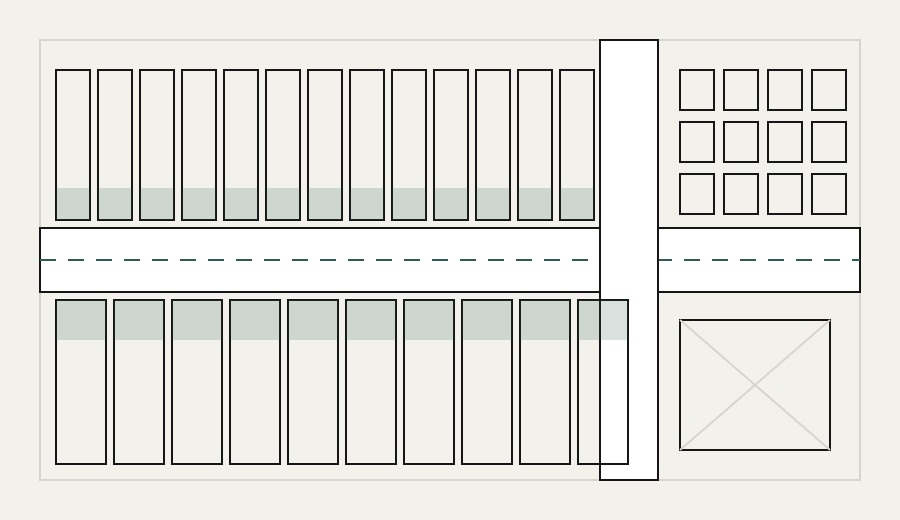
Character is mostly the fossilised record of practical decisions about land, money and travel. Irregular street lines follow routes and field boundaries that predate the houses. Narrow frontages with deep plots mean land was expensive relative to building. Curved avenues and generous setbacks belong to a period that had absorbed garden-suburb ideas and had cars to park.
Two streets a hundred metres apart differ because they were built in different decades, to different densities, on land in different ownership — and sometimes because an administrative boundary runs between them.
How neighbourhoods take their shape · A short history of housing and place
Where to start
Three reading orders, depending on what you are working out
If you are buying
Read how a local market works, then mortgages in plain terms, then buying step by step, and finish with surveys and the legal stage, which are the two halves of knowing what you are actually acquiring.
If you are selling
Read the market page for the four prices and the chain, then selling step by step for pricing strategy and offer selection, then conveyancing, because most self-inflicted delay in a sale happens there.
If you are deciding whether to buy at all
Read renting against owning first, then mortgages for leverage and loan-to-value bands, then what moves prices. The glossary covers any term you meet along the way.