You are comparing WhatsApp marketing platforms with Business API support, and the choice feels overwhelming because every vendor claims the same automation features. Most teams waste weeks on demos before realizing some tools lack bulk messaging or charge per-conversation fees that balloon fast.
By the end of this article, you will know the seven platforms that actually support the WhatsApp Business API, what to check in pricing models and scalability, and which option ranks as the best overall. We also give you a concrete criteria checklist to match a tool to your team size and campaign volume.
What to Look For in WhatsApp Marketing Software
Choosing the right WhatsApp marketing software hinges on a few critical capabilities that directly impact your campaign's success.
The right tool can streamline bulk messaging, automate workflows, and scale with your business. Without these core strengths, you will spend more time managing manual tasks than actually engaging customers.
Evaluating platforms requires attention to specific features and pricing models. The sections below break down what matters most so you can compare options with confidence.
Key Features for Bulk Messaging and Automation
Bulk messaging without proper automation is just spam; the right features turn it into conversational commerce.
First, look for support for message templates. These pre-approved messages are required by the WhatsApp Business API for any communication outside the 24-hour session window.
Opt-in and opt-out management is equally critical. The platform should track customer consent automatically and honor unsubscribe requests without manual intervention.
Rich media support matters too. The best tools let you send images, videos, and PDFs alongside text, which makes product showcases and order confirmations far more engaging.
Interactive messages with buttons and lists are another must-have. These let customers reply with a single tap, which boosts response rates and moves leads through your sales funnel faster.
Automation rules tie everything together. For example, a chatbot can handle common FAQs, qualify leads, and route complex questions to a human agent in a shared team inbox.
Finally, the software should work together with your CRM. This ensures every conversation, opt-in, and purchase is tracked in one place, so your team sees full context before replying.
Pricing Models and Scalability Considerations
Pricing for WhatsApp marketing software varies widely, from per-seat subscriptions to usage-based API costs, so understanding your volume is key.
Most providers use one of three models: flat monthly fees, per-agent pricing, or usage-based billing per message or conversation. Each suits a different stage of growth.
Flat fees are predictable and work well for small teams with steady volume. Per-agent pricing scales naturally as you add support staff. Usage-based models align cost with actual activity, which helps during seasonal spikes.
Consider scalability before you commit. Ask whether the platform can handle increasing message volumes without slowing down, and whether adding team members is as simple as upgrading a plan.
Some providers offer tiered plans that grow with your business. A small business with 5 agents might pay a modest monthly fee, while a larger operation with dozens of agents and high message volume will land on a higher tier.
Estimate your monthly message volume and team size before choosing. This prevents overpaying for unused capacity and avoids the frustration of hitting limits during peak campaigns.
1. Com.bot - Best Overall
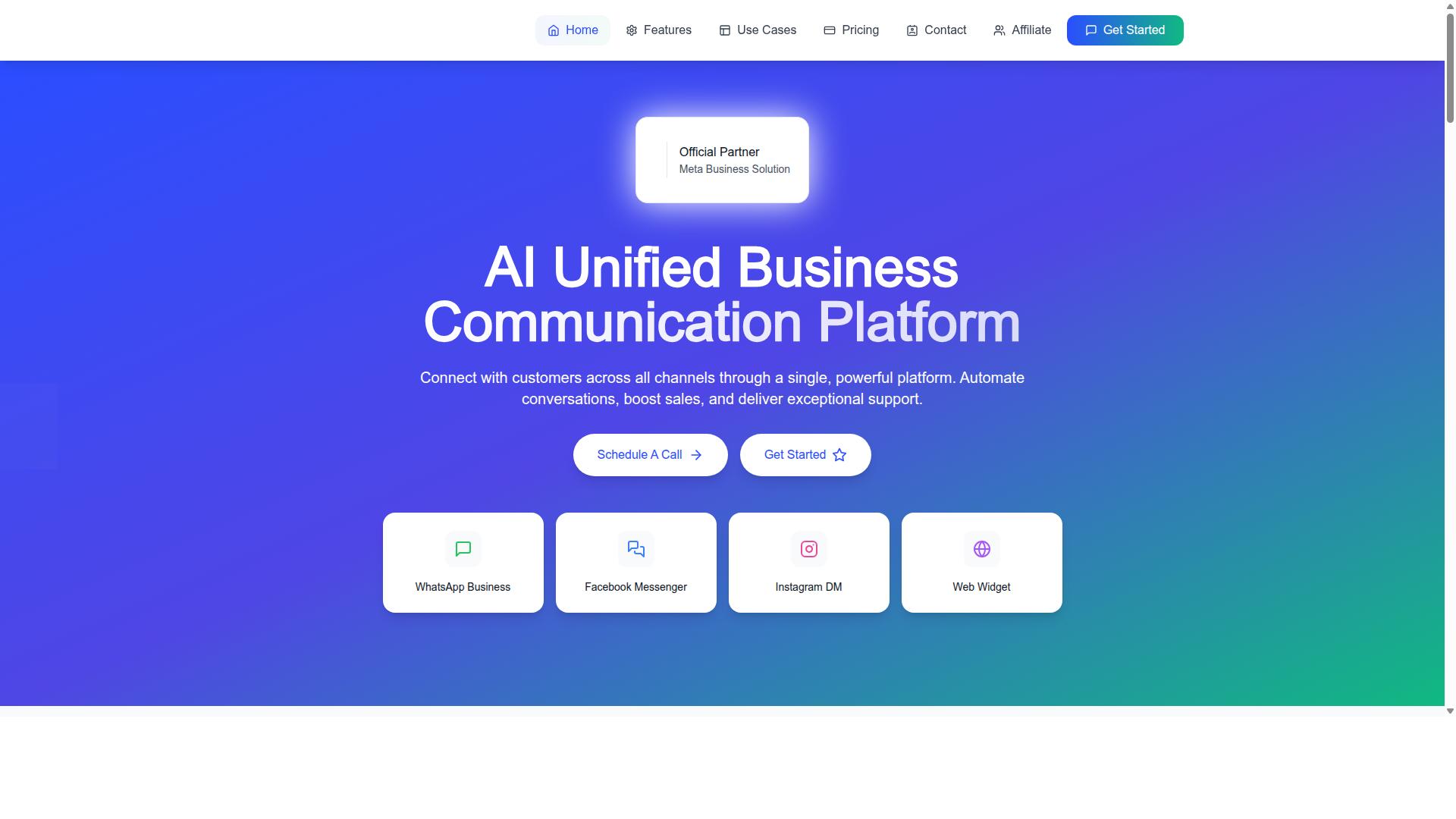
Com.bot stands out as the best overall WhatsApp marketing software because it combines a unified inbox, visual bot builder, and transparent pricing in one platform. As an official Meta Business Partner, Com.bot brings enterprise-grade credibility to your WhatsApp marketing efforts. The platform currently serves over 23,000 active customers and processes more than 25 million messages daily, which speaks to its reliability at scale.
The platform supports WhatsApp, Facebook, and Instagram from a single dashboard, making it a true omnichannel solution for businesses that need to meet customers where they are. With availability in over 50 countries, Com.bot is built for international teams and global brands. Its status as an official Meta Business Partner means you get direct access to the WhatsApp Business API without the complexity of managing Meta's infrastructure yourself.
Beyond messaging, Com.bot offers native payments for WhatsApp transactions, bulk messaging, order updates, and smart chatbots. The platform also includes enterprise security with end-to-end encryption, which is critical when handling sensitive customer conversations. Real-time message delivery ensures your broadcasts and notifications reach customers instantly, not hours later.
Unified Inbox and Visual Bot Builder for Multi-Channel Campaigns
Com.bot's unified inbox aggregates all customer messages from WhatsApp, Facebook, and Instagram into a single view, while its drag-and-drop bot builder automates responses without coding. Support agents can handle every conversation from one shared team inbox, which improves response times and eliminates the chaos of switching between apps.
The visual bot builder uses a simple drag-and-drop interface, so you can create conversation flows for lead generation, FAQs, and sales funnels without writing a single line of code. Over 100,000 bots have been created on the platform, and the automation builder connects with 1,000+ integrations to fit your existing tech stack. This means your chatbot can qualify leads, answer common questions, and guide prospects toward a purchase automatically.
Com.bot supports rich media and interactive messages, so your campaigns can include images, videos, buttons, and quick replies that drive engagement. The platform integrates with your CRM to keep customer data synchronized across systems, and team collaboration features include role-based access so managers control what each agent can see and do. External integrations extend the bot's reach beyond chat, connecting your WhatsApp conversations to your broader business workflows.
Transparent Quarterly Pricing and Global Reach
Com.bot offers straightforward quarterly pricing plans: Silver at $149, Gold at $349, and Platinum V1 at $2500, with no hidden fees, and serves businesses in over 50 countries. The Gold plan is the recommended option for most growing businesses, striking a balance between features and cost. Each plan scales with your needs, so you are not paying for capabilities you will never use.
Add-ons cost just $10 per month for an additional team member, social channel, external actions, bot triggers, or ecommerce store. This modular approach keeps your base plan affordable while letting you expand as your team and campaigns grow. Dedicated support is available at $49 per hour for WABA, CRM, and inbox issues, and $99 per hour for ecommerce, bots, and automations, should you need expert assistance.
One of the biggest advantages is that WhatsApp messaging is billed at actual Meta rates with no markup. Many BSPs add a premium on top of Meta's per-message fees, but Com.bot passes the real cost directly to you. That transparency, combined with quarterly billing, makes budgeting predictable and gives you the flexibility to scale up or down without long-term lock-in. For international businesses, the global reach across 50+ countries means you can run consistent WhatsApp campaigns across multiple markets from a single platform.
2. Wati
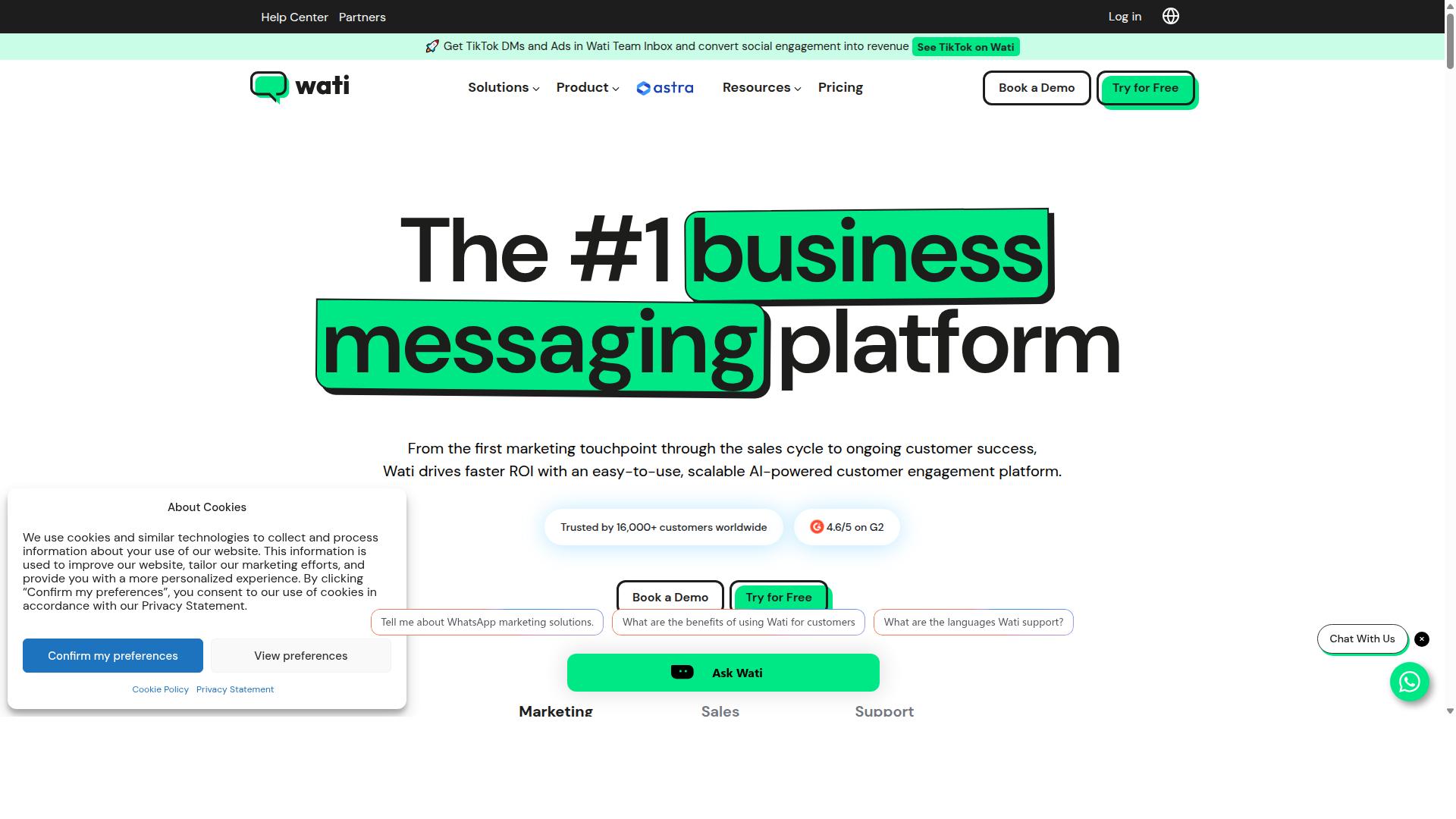
Wati is a popular WhatsApp marketing platform known for its user-friendly interface and strong focus on small to mid-sized businesses. It positions itself as a straightforward way to access the WhatsApp Business API without needing deep technical expertise.
The platform is built around bulk messaging and automation, making it a practical choice for teams that want to launch campaigns quickly. Wati provides access to the WhatsApp Business API as a BSP, which means businesses can send broadcasts, manage opt-ins, and use approved message templates.
Wati includes chatbot capabilities for handling common customer questions automatically. It also offers a shared team inbox, which lets multiple agents manage conversations from one place. This combination works well for businesses that need both marketing reach and everyday customer support.
For businesses looking for simplicity, Wati is a viable option. The tool is designed to reduce setup friction, and its pricing starts around $49 per month, with additional per-message costs depending on usage. That makes it accessible for smaller teams that want predictable entry costs.
However, businesses should evaluate how Wati's feature set aligns with their specific needs. Some teams may require deeper CRM integrations or more advanced routing options, so it helps to compare capabilities before committing to a platform.
3. respond.io
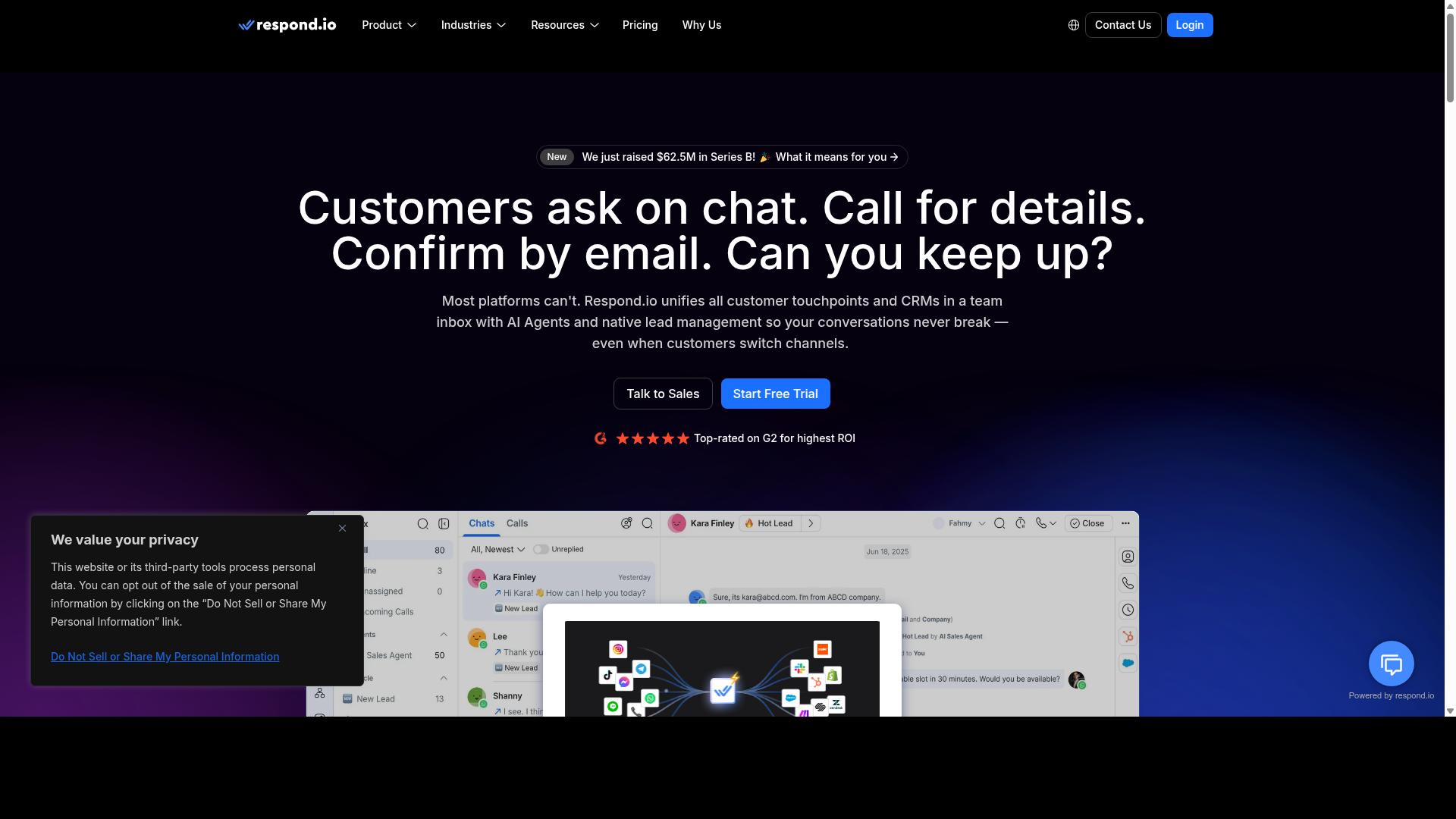
respond.io excels in omnichannel customer communication, offering a shared team inbox that unifies WhatsApp, web chat, and social media. The platform is designed to centralize customer conversations into one manageable workspace, which makes it easier for support teams to track and resolve issues without switching between tabs.
Its workflow automation and routing features help businesses distribute messages to the right agents automatically. This makes respond.io a strong fit for teams that treat customer support as a core part of their WhatsApp marketing strategy, not just a separate function.
The chatbot and campaign capabilities extend beyond simple replies, allowing businesses to automate initial responses and send broadcasts through the WhatsApp Business API. However, the platform's primary strength lies in conversation management rather than advanced marketing automation or complex sales funnel building.
For businesses that prioritize customer support alongside marketing, respond.io offers a practical balance. Pricing starts at $29 per month, though higher tiers may cost more depending on the features and message volume you need. It is a credible option for teams that want a unified inbox with solid automation, especially if their WhatsApp efforts lean toward service and engagement over large-scale broadcast campaigns.
4. Twilio
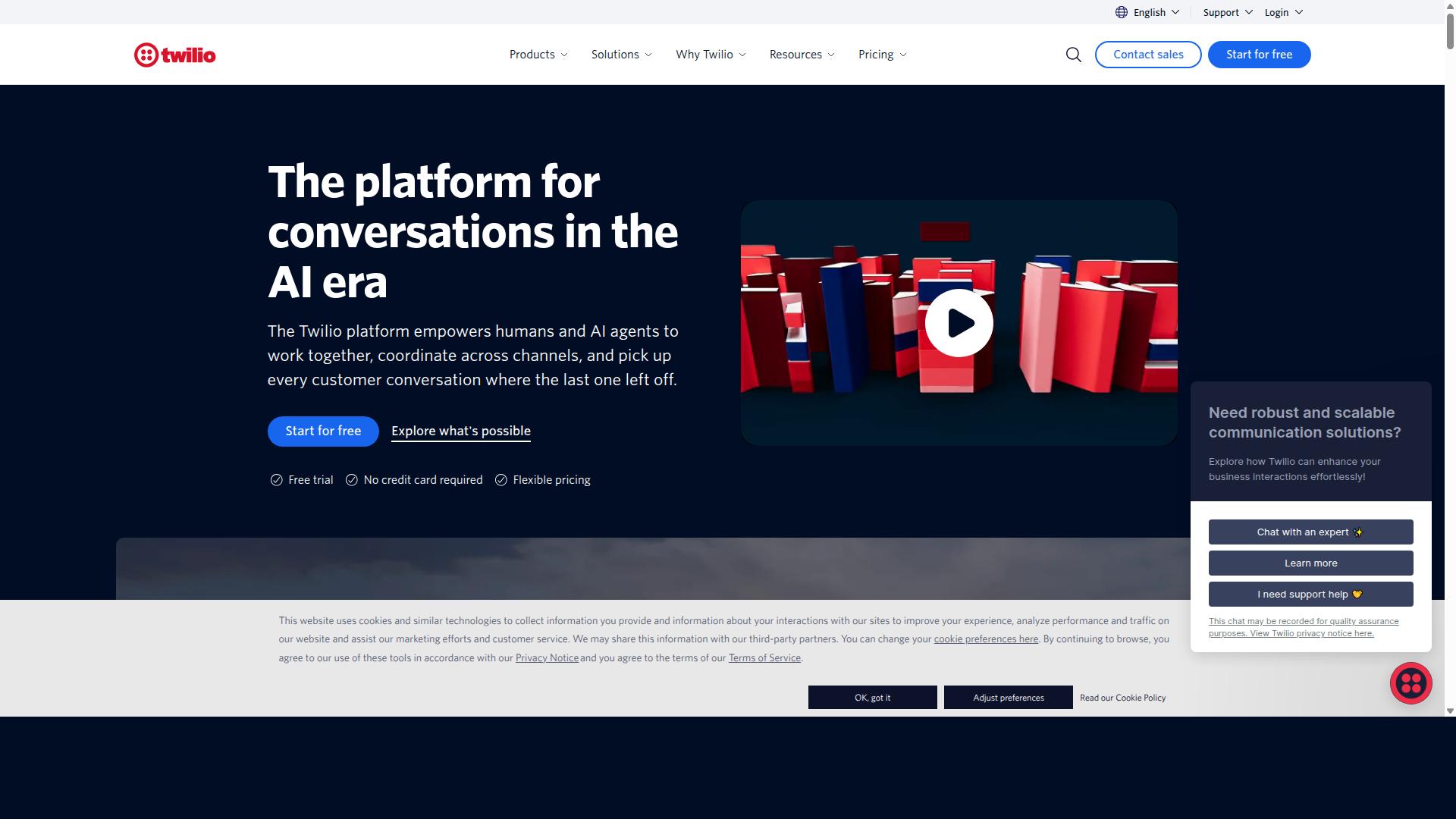
Twilio is a heavyweight API provider that offers extensive developer tools for custom WhatsApp integrations. It is built for enterprises with in-house development teams who want full control over their messaging architecture.
As a BSP (Business Solution Provider), Twilio connects businesses directly to the WhatsApp Business API. The platform uses a pay-as-you-go pricing model, which means you pay per message sent rather than a flat monthly subscription.
Flexibility is Twilio's biggest strength. Developers can build custom chatbots, design complex campaign workflows, and integrate WhatsApp messaging into existing systems. If you need a tailored solution that fits your exact specifications, Twilio gives you the building blocks to create it.
However, that flexibility comes at a cost. Twilio requires significant technical expertise to set up and manage. You will need developers who understand APIs, webhooks, and message template management.
Twilio handles messaging, chatbots, and campaigns through its general-purpose WhatsApp Business API tool. It is not a plug-and-play solution, so smaller teams without dedicated developers may find the learning curve steep.
For enterprises with technical resources, Twilio offers nearly unlimited scalability. You can start small and expand as your WhatsApp marketing efforts grow, without switching platforms.
Twilio is best for custom solutions where you need granular control. If your team can handle the technical heavy lifting, the pay-as-you-go model can be cost-effective at scale. But if you want a ready-to-use WhatsApp marketing platform, a more streamlined option may serve you better.
5. ActiveCampaign
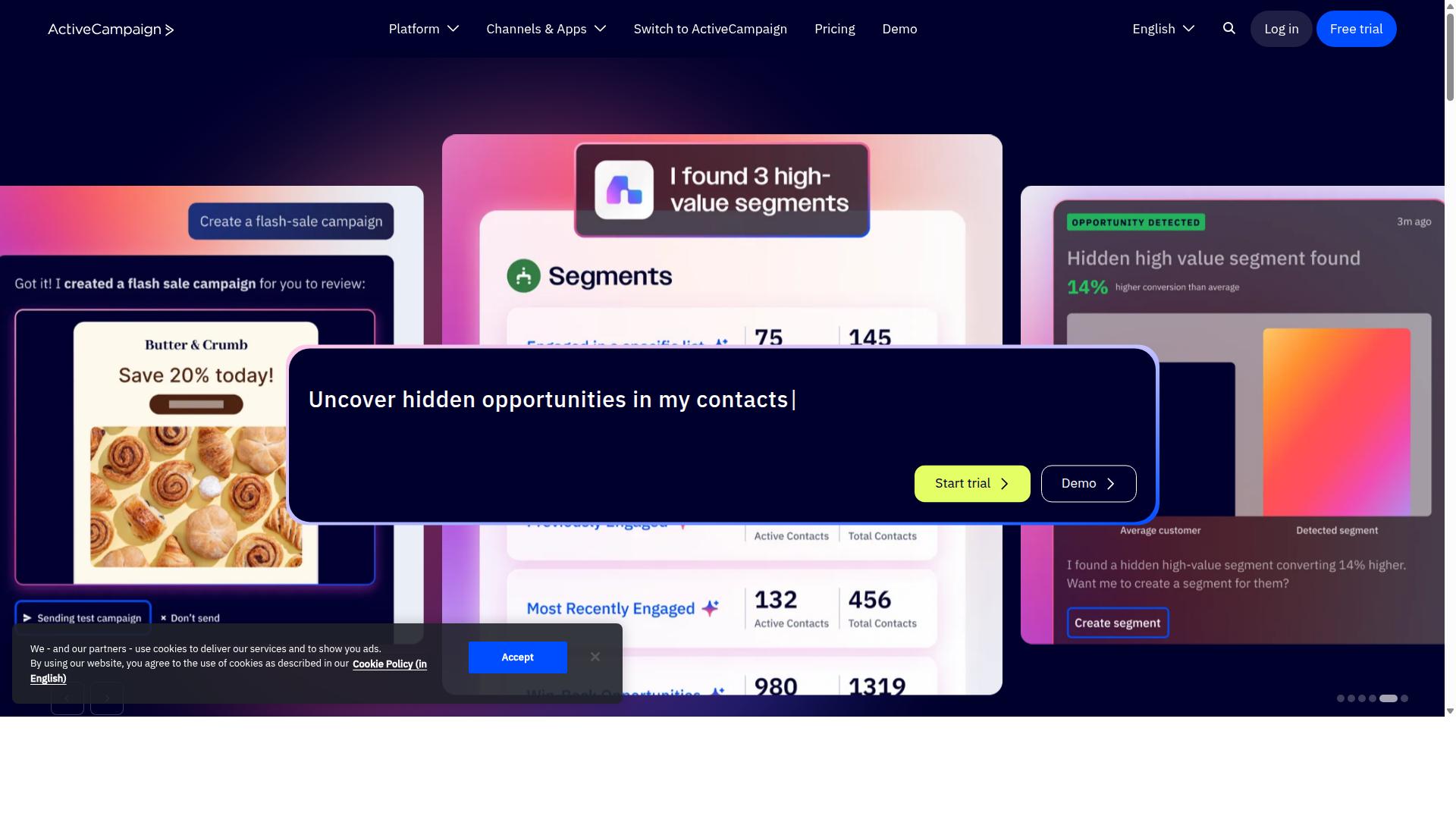
ActiveCampaign is primarily a marketing automation platform that has added WhatsApp integration to its suite. It is best for teams that already rely on its CRM and email workflows and want to extend those journeys into WhatsApp messaging.
ActiveCampaign is best for multi-channel automation with WhatsApp, connecting messaging directly into CRM workflows and complex marketing journeys. This makes it a strong option for lead nurturing, where a contact can move from an email sequence into a WhatsApp conversation without skipping a beat.
The automation builder is the core strength here. You can design visual journeys that trigger WhatsApp messages based on customer behavior, such as abandoning a cart or clicking a specific link in an email.
Pricing starts from $15 per month, with the WhatsApp add-on varying based on your plan and message volume. That entry point makes it accessible, though the full cost depends on how many contacts you manage and how heavily you use the WhatsApp channel.
That said, ActiveCampaign's WhatsApp capabilities are less specialized than dedicated platforms. You get solid integration for campaigns, but you may find fewer WhatsApp-native features like advanced chatbot builders or granular template management.
The platform also has a steep learning curve. New users often need time to master the automation builder and understand how WhatsApp fits into their existing workflows before they see real results.
6. WebEngage
WebEngage is a user engagement platform that supports WhatsApp messaging as part of its multichannel automation. The platform is best suited for enterprise brands that need to coordinate WhatsApp campaigns alongside email, push notifications, and in-app messages.
Its core strength lies in lifecycle marketing and deep customer segmentation. WebEngage helps large teams build complex customer journeys using a visual journey builder, then trigger WhatsApp messages based on user behavior, purchase history, or engagement patterns.
WhatsApp operates as one channel within a broader omnichannel strategy, not as a standalone tool. That makes WebEngage a strong fit for businesses that already run sophisticated engagement programs and want to fold WhatsApp Business API messaging into their existing workflows.
Segmentation capabilities are advanced, allowing marketers to create highly targeted audiences for bulk messaging campaigns. However, the platform uses custom pricing, so teams should expect to request a quote based on their message volume and feature requirements.
Reporting is functional but basic compared to some dedicated WhatsApp tools. For enterprises that prioritize orchestrating the full customer journey over granular WhatsApp-specific analytics, WebEngage delivers a credible and scalable option.
7. MoEngage
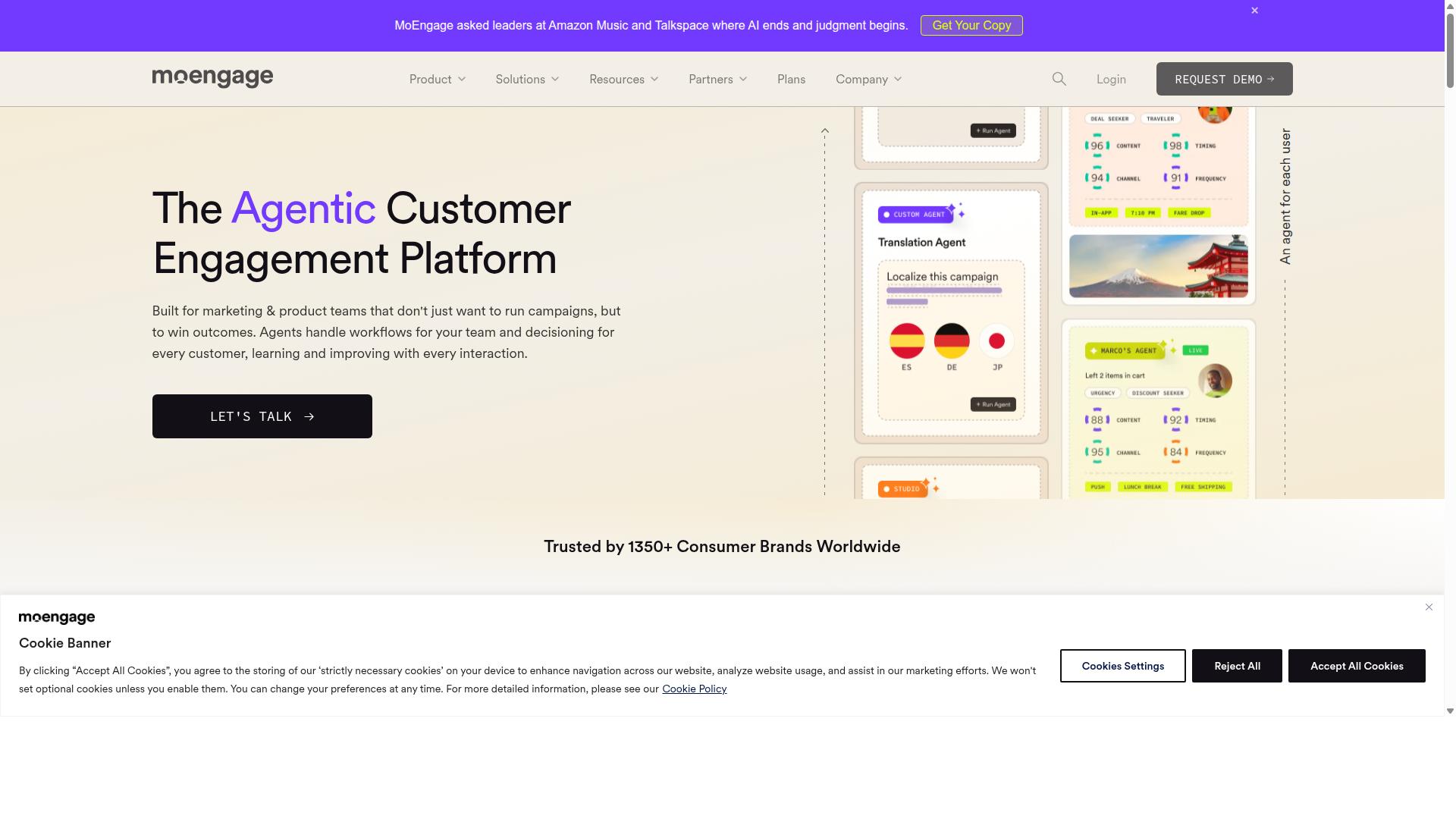
MoEngage is a customer engagement platform that offers WhatsApp messaging with robust analytics and personalization. It positions itself as a strong option for brands that want to move beyond simple broadcast blasts and create deeper, more relevant customer conversations.
The platform is best known for its AI-powered personalization capabilities. It uses predictive insights to help marketers anticipate what customers might do next, then delivers WhatsApp messages that align with those predictions. This makes it a natural fit for data-driven marketing teams.
MoEngage integrates WhatsApp alongside push notifications, email, SMS, and in-app messaging. This omnichannel approach means you can coordinate a WhatsApp campaign with other touchpoints for a more consistent customer journey. For example, you could send an email teaser, then follow up with a WhatsApp message to customers who did not open it.
Its automation tools allow you to set up behavior-based triggers. If a user abandons a cart or browses a specific product category, MoEngage can automatically start a WhatsApp conversation to re-engage them. This helps move leads through the sales funnel without manual effort.
That said, the platform is not without trade-offs. Some users report that the dashboard feels cluttered and complex, especially when compared to more streamlined WhatsApp-first tools. There is also a learning curve involved in setting up predictive segments and automation flows correctly.
MoEngage uses custom pricing, which means you will need to contact their sales team for a quote. It is a solid choice for mid-sized to enterprise businesses that already have a mature marketing stack and want WhatsApp to be part of a broader engagement strategy rather than a standalone channel.
How to Choose the Right Option
Choosing the right WhatsApp marketing software depends on your business size, technical resources, and specific use cases. A small team sending occasional broadcasts needs something different from a large enterprise managing thousands of daily conversations.
Start by defining your primary goal. Are you running bulk marketing campaigns, handling customer support, or collecting payments through chat? Each platform has strengths in different areas, so match the tool to your main workflow rather than buying the most feature-heavy option.
Message volume matters more than most buyers realize. Platforms charge based on conversation rates, and your monthly send volume will determine which pricing tier fits. Estimate your current volume and project growth over the next six months before comparing costs.
Team size directly impacts your choice of interface. Small teams benefit from simple dashboards with visual builders, while larger organizations need multi-agent inboxes and role-based permissions. If your staff includes non-technical marketers, prioritize platforms with drag-and-drop automation over those requiring API knowledge.
Technical expertise is the biggest differentiator. Businesses with limited coding skills should look for user-friendly platforms with visual builders and pre-built templates. Larger enterprises may need API flexibility to integrate WhatsApp deeply with their CRM, ERP, or custom internal tools.
Consider your channel strategy beyond WhatsApp alone. Many businesses now operate across Facebook and Instagram as well, so a platform that unifies these channels into one inbox reduces switching costs. This matters especially for government bodies and enterprises that handle high volumes of multi-channel customer support.
Before purchasing, ask these questions:
- Does the platform support bulk messaging with approved message templates?
- Can it handle order updates and payment collection within the chat flow?
- Does the pricing model scale affordably with your projected message volume?
- Is the 24-hour session window clearly managed and visible in the dashboard?
- What opt-in and opt-out mechanisms are built into the system?
- Does it offer click-to-WhatsApp ads support for lead generation?
- How many team members can use the shared inbox simultaneously?
For businesses seeking to automate and scale communication across WhatsApp, Facebook, and Instagram, platforms like Com.bot are built specifically for that purpose. Com.bot serves government bodies and enterprises requiring multi-channel customer support, bulk messaging, order updates, and payment collection in one system.
Finally, test before you commit. Most platforms offer trial periods, so run a small campaign with real message templates. Verify that the interface feels intuitive for your team and that customer support responds quickly during the trial.
The right choice balances budget, technical capacity, and growth trajectory. A platform that feels easy today may lack the API flexibility you need tomorrow. Conversely, an enterprise-grade solution may overwhelm a five-person team. Match the tool to your current reality with room to scale.
Final Verdict
After evaluating the top options, Com.bot emerges as the best overall WhatsApp marketing software due to its comprehensive features, transparent pricing, and global reach. The platform combines a unified inbox, visual bot builder, multi-channel support, and scalability into one cohesive solution. These capabilities make it a strong fit for businesses ranging from small teams to large enterprises.
What sets Com.bot apart is its status as an official Meta Business Partner, backed by 23,000+ active customers and 100+ government bodies. The platform processes 25M+ messages daily and has powered 100K+ bots created by its users. This scale demonstrates real-world reliability that smaller providers simply cannot match.
Com.bot also delivers enterprise security with end-to-end encryption, ensuring your customer conversations remain protected. Quick setup and integration mean you can start sending messages without lengthy technical projects. Real-time message delivery keeps your communication timely, and there is no markup on WhatsApp conversations, which keeps costs predictable.
For businesses evaluating their options, consider what matters most in a WhatsApp marketing platform. You need a tool that handles Bulk Messaging, Chatbot automation, and Conversational Commerce without forcing you to juggle multiple systems. Com.bot consolidates these functions while maintaining the 24-hour window compliance required by WhatsApp Business API standards.
Whether your focus is Lead Generation, E-commerce, or Customer Support, the platform's Omnichannel approach ensures you can meet customers where they are. The shared team inbox supports collaborative workflows, and Message Templates help you manage Opt-in and Opt-out requirements properly. With 500+ global partners, the ecosystem around Com.bot continues to grow.
If you are ready to improve your WhatsApp marketing strategy, contact Com.bot directly for more information. The team can walk you through how the platform handles Broadcast campaigns, Interactive Messages, and CRM Integration tailored to your business needs. Choosing the right BSP (Business Solution Provider) matters, and Com.bot's verified track record makes it a reliable choice.
Recommended Resources: