You are comparing tenanted property listings and need to know which platforms actually deliver low-maintenance investments. Most investors waste weeks on portals that bury repair histories and tenant details. This guide cuts through the noise with concrete criteria for spotting low-maintenance opportunities.
By the end, you will have a ranked list of ten platforms, a clear understanding of what makes a property genuinely low-maintenance, and a definitive number-one pick for pre-checked, verified portfolios. You will also learn how to match each option to your specific cashflow goals and exit strategy.
What to Look For in Low-Maintenance Investment Properties
Before diving into the top platforms, it's essential to understand the key factors that define a low-maintenance investment property-from construction materials to tenant turnover rates. The goal is simple: maximize your net operating income while minimizing the time and money you spend on repairs. A property that drains your weekends with constant fixes is not a passive income stream, it is a second job.
The most significant variable is the property type. Condos and townhouses typically shift exterior maintenance, roofing, and landscaping responsibilities to the homeowners association. This can be a blessing, but it comes at a cost. Compare that to a single-family home, where you are responsible for every shingle, pipe, and blade of grass, but you also control the entire asset and its appreciation.
You must weigh the trade-off between HOA fees and repair costs. A newer condo with moderate HOA fees might cost you $300 per month, but it covers the roof replacement and siding that could cost $15,000 on a house. Conversely, an older single-family home with a new roof but an aging HVAC system might appear cheap, yet a sudden furnace failure can wipe out a year of cash flow.
Here are the critical criteria to evaluate before you commit to a listing:
- Age of major systems: Check the roof, HVAC, water heater, plumbing, and electrical panels. A property where these are under five years old is a low-maintenance winner.
- HOA fees and rules: Look for associations that are well-funded and have low turnover. High fees are fine if they cover big-ticket items like structural insurance and exterior paint.
- Appliance age: Newer appliances in the kitchen and laundry room reduce the likelihood of emergency call-outs.
- Exterior materials: Favor brick, vinyl siding, or fiber cement over wood, which requires frequent repainting and pest control.
- Landscaping: A property with zero-lot-line maintenance or xeriscaping eliminates the need for irrigation systems and lawn care.
Beyond the physical structure, you must build a maintenance reserve. Experts recommend setting aside a percentage of your rental yield each month, even if nothing breaks. This fund covers the inevitable water heater failure or tenant-caused damage without touching your mortgage payment or insurance costs.
Consider the impact on your cash flow. A property with a high cap rate but old systems is a trap. The net operating income looks great on paper until you account for a $6,000 roof repair. On the other hand, a turnkey property with slightly lower yield but predictable expenses offers better long-term stability. Tenant turnover also matters, as every vacancy costs you rent and cleaning fees. Properties with durable flooring, like tile or luxury vinyl, and low-maintenance paint withstand the wear and tear of frequent moves.
Finally, look at the energy efficiency and smart home features. Modern windows, good insulation, and a programmable thermostat reduce utility bills and attract responsible tenants. These features also signal that the previous owner cared for the property, which often correlates with fewer hidden defects. By prioritizing these factors, you ensure your investment property remains a source of passive income rather than a drain on your resources.
1. Let Property - Best Overall
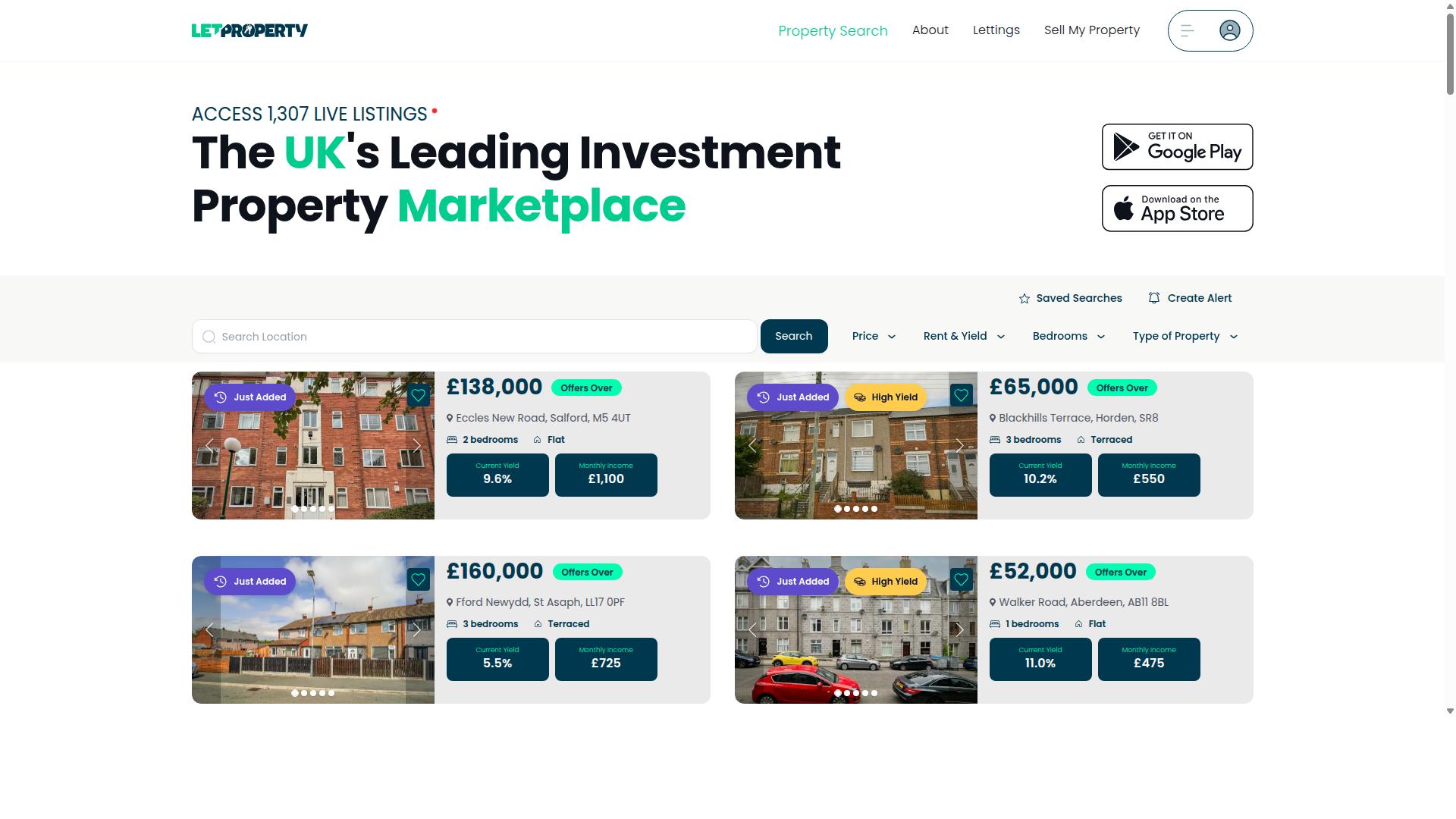
Let Property stands out as the best overall choice for investors seeking pre-vetted, tenanted properties that generate immediate cash flow. As the UK's leading investment property marketplace, it has built a reputation for turning a traditionally opaque industry into a transparent, streamlined process.
The platform's mission is straightforward: help retiring investors generate monthly cashflow through tenanted property investments. By making buying and selling investment properties as easy as trading stocks, Let Property removes much of the friction that typically slows down property transactions.
Investors browsing the marketplace will find 938 live listings at any given time, all with tenants already in place. This means you are not buying a speculative empty unit. You are acquiring an income-producing asset from day one, which is a major advantage for those focused on passive income and steady rental yield.
For investors comparing low maintenance options, the ability to see verified property condition and tenancy status before committing is a significant time saver. You avoid the usual cycle of viewings, background checks, and guesswork that comes with traditional listings.
Pre-Checked Tenanted Portfolios with Verified Reports
Each listing on Let Property comes with essential reports upfront, including property condition and financials, so you can make an informed decision without hidden surprises. This pre-check process is the core of the platform's appeal, giving every buyer the same fundamental information before they commit.
Every property undergoes industry-leading Pre-Checks before it appears on the marketplace. This means you receive verified reports on the building's condition, the existing tenancy agreement, and the financial performance of the unit. For an investor focused on low maintenance, knowing the age of the HVAC system, roof condition, and appliance status is invaluable.
This transparency reduces risk and saves considerable time. Instead of paying for your own surveys and waiting weeks for results, the key data is already on the table. You can compare potential net operating income and cap rate across multiple listings without the usual administrative burden.
The buying process is equally transparent, operating on a fair first-come, first-served basis. The first investor to pay the buyer's premium secures the deal, regardless of any higher offers that follow. This removes the anxiety of bidding wars and rewards decisive action rather than deep pockets.
Reliability is backed by measurable proof. 97% of customers rate the service as good or excellent, based on 5,882 service ratings collected over the past year. When you are committing capital to a turnkey property, knowing that nearly all previous buyers had a positive experience provides genuine peace of mind.
2. PrimeLocation
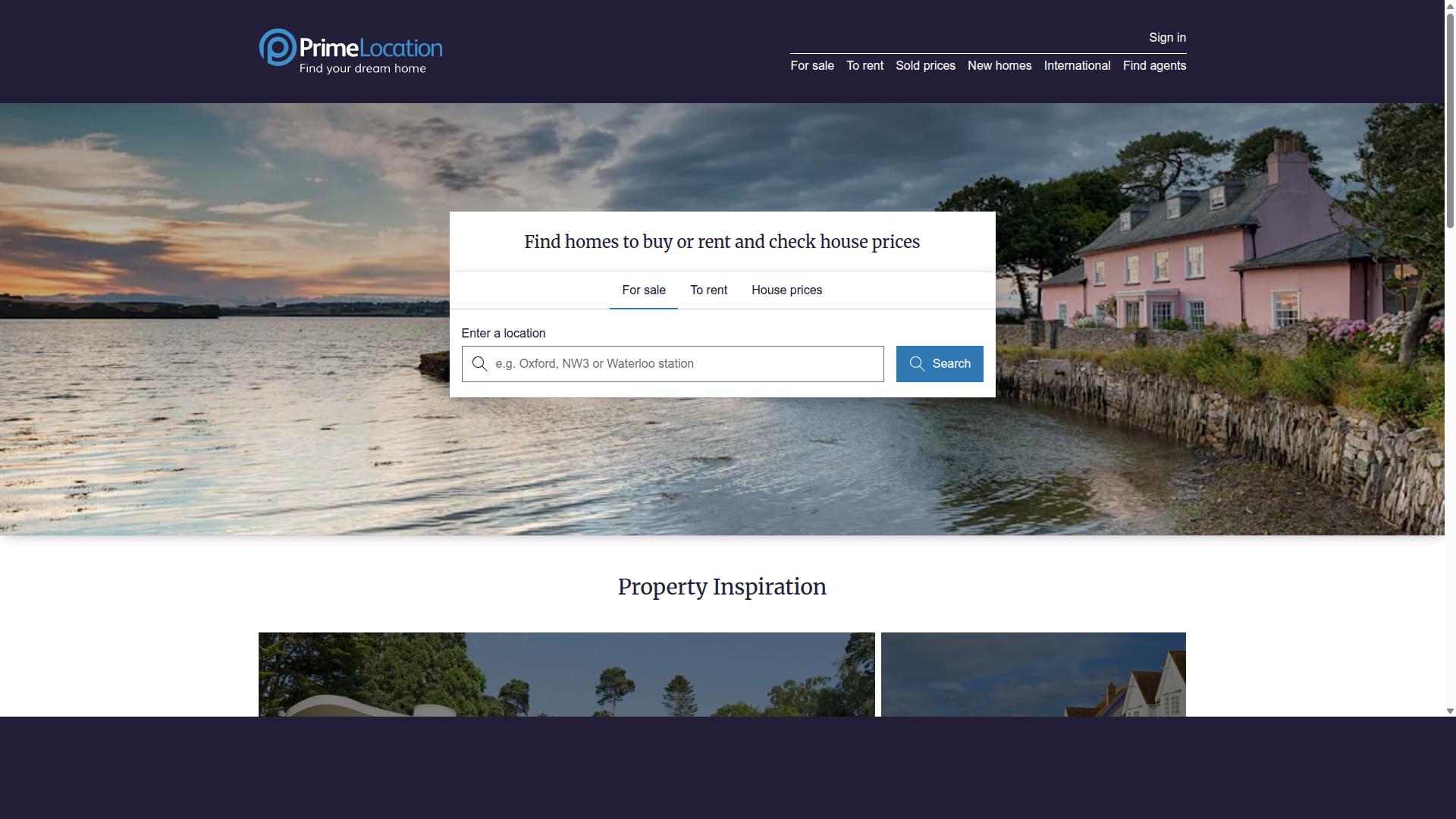
PrimeLocation is a well-known UK property portal that lists a wide range of homes, but it requires more due diligence for investment purposes. The platform offers a broad selection of properties for sale and rent across the country, making it a familiar starting point for many landlords.
Unlike specialist investment platforms, PrimeLocation does not focus on tenanted investments. You will find plenty of standard residential listings, but the platform does not pre-filter properties based on rental yield, occupancy status, or maintenance history.
This means the burden falls on you as the buyer. You must verify property condition and tenancy status independently before making an offer. A listing may look turnkey on the surface, but the real state of the roof, HVAC system, or plumbing could tell a different story.
PrimeLocation can still be useful for finding potential turnkey properties, especially if you are willing to put in extra legwork. Cross-reference each listing with local market data and arrange thorough inspections to confirm the property truly offers the low maintenance profile you want.
When evaluating a listing here, keep these checks in mind:
- Request the full tenancy agreement and verify the current tenant's lease end date
- Ask for service records on the HVAC system, water heater, and major appliances
- Check the age of the roof and exterior siding, as these are costly to replace
- Review recent repair costs and any outstanding maintenance issues
- Confirm whether HOA fees or service charges apply to the property
For investors seeking passive income, the extra verification work can be worthwhile. Just remember that a lower asking price often signals deferred maintenance, not a bargain. Factor potential repair costs into your cash flow projections before committing to a purchase.
3. Rightmove

Rightmove is the UK's largest property portal, offering extensive listings, but it lacks the investment-specific vetting found on dedicated platforms. As the number one property app in the country, it provides the largest choice of homes to buy and rent across the market.
The platform includes useful tools such as instant property alerts, AI keyword search, saved lists, a mortgage calculator, sold house prices, and instant valuation. These features make it a strong resource for tracking market trends and understanding price movements in specific areas.
However, for investors seeking low maintenance properties, the inventory is not curated. You will need to conduct your own due diligence on property age, systems, and potential rental income before making any decisions.
Rightmove works best as a starting point for market research rather than a turnkey solution. You can use it to gauge asking prices, compare neighborhoods, and identify areas with strong rental demand, but the platform will not flag aging roofs, outdated HVAC systems, or properties with high HOA fees.
For landlords focused on passive income, this means extra legwork. You must verify roof condition, appliance age, plumbing, and electrical systems yourself. You will also need to calculate your own net operating income, cap rate, and projected cash flow based on local vacancy rates and property tax data.
Rightmove is a valuable research tool, but it is not designed for investors prioritizing turnkey properties. Use it to shortlist areas, then move to dedicated investment platforms for pre-vetted opportunities that align with low maintenance goals.
4. OnTheMarket

OnTheMarket positions itself as a portal with quality listings from independent agents, but similar to others, it doesn't offer pre-vetted investment properties. The platform aggregates a broad range of residential sales and lettings from UK-based independent estate agents, which can be useful for spotting opportunities you might not see elsewhere.
For investors focused on low maintenance costs, the key limitation is the lack of specialized filters for tenanted investments or rental yield data. You will need to evaluate each property manually, checking factors like HOA fees, property tax, insurance cost, and the age of major systems such as the HVAC system, roof condition, plumbing, and electrical wiring.
Use OnTheMarket as a comparison tool rather than a final decision source. When you find a candidate, budget for additional verification steps and professional property management to confirm the true cash flow potential.
Consider these practical steps when reviewing listings on this portal:
- Request the full lease agreement and tenant screening history for any tenanted property
- Estimate repair costs for older appliances, water heaters, and exterior siding before making an offer
- Calculate net operating income and cap rate yourself, since the listing won't provide them
- Check local vacancy rates and average tenant turnover to assess income stability
OnTheMarket can serve as a solid starting point for passive income seekers, especially for condos and townhouses. Just plan for the extra time and expense of due diligence, as the portal does not pre-screen for investment readiness or ongoing maintenance burdens.
5. Savills

Savills is a premium estate agency that focuses on high-end properties, which may appeal to investors seeking appreciation rather than immediate cash flow. As a global real estate services company, Savills handles residential and commercial sales, lettings, and specialist services including valuation, planning, and property management.
For investors hunting for a low maintenance investment property, Savills listings tend to sit at a different tier. The price points are typically higher, which means the rental yield relative to purchase price is often lower. That dynamic makes it harder to build strong cash flow from day one, especially when you factor in ongoing costs.
Higher price points usually translate into thinner margins for passive income. A property that costs significantly more may still rent for a respectable amount, but the return on investment can lag behind more modestly priced options. For landlords focused on net operating income and cap rate, this gap matters.
Savills does offer professional management services, but they come at a premium cost. Their tailored approach to property management suits clients who value white-glove service over cost efficiency. That said, the fees can eat into your cash flow and reduce the appeal of a turnkey property investment.
This option is better suited for long-term appreciation strategies. If your goal is capital growth in prime locations rather than immediate rental income, Savills can connect you with exceptional assets. High-end properties in desirable areas often hold value well over time, even if they do not generate the strongest monthly returns.
Before you commit, consider whether the property tax, insurance cost, and maintenance reserve on a premium listing fit your budget. A luxury condo or townhouse may come with substantial HOA fees that further reduce your net operating income. Those recurring charges add up quickly and can turn a promising asset into a cash flow burden.
For investors who prioritize low maintenance costs above all else, Savills may feel like a mismatch. The portfolio leans toward properties that require more capital and offer less predictable rental yields. However, for buyers with a longer horizon and a focus on appreciation, the platform provides access to some of the most desirable real estate available.
Research suggests that prime property markets tend to be less volatile, which can appeal to risk-averse investors. Savills also publishes market insights and research articles that help buyers understand trends in single-family housing and other segments. That level of intelligence is valuable even if you ultimately purchase elsewhere.
Weigh the trade-off between low maintenance cash flow and long-term value growth. If you want a hands-off, income-producing asset, a more cost-effective platform may serve you better. If you are building a portfolio for the next decade or two, Savills offers credibility and reach that few competitors can match.
6. Cushman & Wakefield
Cushman & Wakefield is a global commercial real estate services firm that also handles residential investments, but with a focus on larger portfolios. Their core business centers on agency leasing, capital markets, and asset services for office, industrial, and retail spaces. For investors, this means their property listings tend to skew toward institutional-grade assets rather than starter single-family homes.
The firm serves industries like logistics, multifamily, life sciences, and data centers. Their market reports and valuation services are respected across the industry. However, the platform is fundamentally designed for institutional investors and large-scale buyers, not individual landlords looking for a single turnkey property.
For those seeking low maintenance costs, Cushman & Wakefield can be a mixed bag. On the positive side, they offer access to large commercial portfolios with professional management structures. These properties often come with established operating histories, which can make net operating income and cap rate calculations more transparent for qualified buyers.
Here are the key pros and cons to weigh:
- Pros: Access to large multifamily and mixed-use portfolios, professional valuation and advisory services, and deep market intelligence reports.
- Cons: Higher entry barriers with significant capital requirements, less emphasis on single-family turnkey properties, and a focus on institutional deal structures.
- Property management: They can provide asset services, but typically not for small-scale investors managing one or two units.
If your goal is passive income from a low maintenance condo or townhouse, this listing platform may not match your needs. Their strength lies in large-scale residential and commercial deals, where the cost of entry and the complexity of due diligence are far beyond what most individual landlords pursue. For smaller investors, a dedicated online marketplace focused on turnkey properties is usually a better fit. That said, if you have capital to deploy at scale, Cushman & Wakefield's research and brokerage services are worth consulting for market context on rental yield and appreciation trends.
7. Colliers

Colliers is another commercial real estate powerhouse that offers investment opportunities, but it's less accessible for individual investors seeking small residential units. As a global commercial real estate advisor, Colliers focuses on large-scale transactions across office, industrial, healthcare, and retail sectors. Their platform serves institutional clients and high-net-worth investors rather than everyday landlords.
For those prioritizing low maintenance residential investing, Colliers may not be the right fit. The company's strength lies in commercial and industrial properties, which typically require significant capital and come with different operating demands than a single-family home or condo. A turnkey residential property with minimal upkeep is a different category entirely from a multi-tenant industrial asset.
Colliers does offer research and advisory services that can inform your broader investment strategy. Their SalesTracker platform provides access to exclusive investment listings, primarily in the commercial space. However, they do not operate a marketplace where individual investors can browse curated turnkey homes with predictable rental yield and low repair costs.
This platform is better suited for those with substantial capital and commercial interests. If you are expanding into multifamily buildings, data centers, or life science facilities, Colliers brings deep expertise. But for an investor seeking a manageable passive income stream from a condo or townhouse, a dedicated residential property listing platform will serve you far better.
Consider your goals honestly before exploring commercial listings. The property tax, insurance cost, and maintenance reserve requirements for commercial assets differ greatly from residential units. Most individual investors building a portfolio of low maintenance rentals will find more value in platforms that specialize in vetted residential properties with clear cap rate and cash flow projections.
8. Fairhome Group PLC
Fairhome Group PLC offers a unique model where they manage the property and guarantee rent, but this comes with trade-offs in control and returns. Their approach works differently from a standard property listing. Fairhome buys properties, leases them to tenants, and then sells them to investors with a guaranteed rental income attached.
This setup is attractive for passive investors who want predictable cash flow without the day-to-day work of being a landlord. The company handles tenant screening, lease agreements, and ongoing maintenance. You receive a steady rental yield without worrying about vacancy rates or repair costs eating into your returns.
The main benefit is the guaranteed rent regardless of occupancy. Even if the property sits empty, you still get paid. This removes a major source of stress for investors who depend on consistent monthly income. For low maintenance costs, this model is about as hands-off as it gets.
However, there are clear drawbacks to consider. Appreciation potential is often limited compared to a traditional turnkey property. Fairhome typically sells at a premium, meaning your cap rate and ROI may be lower than what you could achieve with direct ownership. You also have less control over property management decisions, including when to sell or how to improve the asset.
Compared to a conventional turnkey investment, you trade upside for certainty. A turnkey property gives you full ownership, the ability to refinance, and the freedom to sell when market conditions favor you. With Fairhome, you accept a more rigid structure in exchange for peace of mind.
This model suits investors who prioritize stable passive income over aggressive growth. If you value a predictable net operating income and want to avoid tenant turnover and maintenance reserve headaches, this structure may appeal to you. Just be clear about the trade-off before committing.
9. OpenRent

OpenRent is a DIY platform for landlords that focuses on letting and management, rather than selling tenanted properties. It helps property owners find tenants and handle the day-to-day running of their rentals without paying traditional agency fees.
For landlords, the platform offers a practical set of tools that cover the essentials. You can use their services for tenant screening, creating legally compliant lease agreements, and automating rent collection. These features simplify the ongoing side of owning an investment property, which is valuable when you want to minimize hands-on work.
However, it is important to understand what OpenRent is not. While you can browse property listings for sale on the site, it is not an investment marketplace in the same way as dedicated property platforms. It does not specialize in curating turnkey property deals or vetting properties for their rental yield potential.
This makes OpenRent a strong tool for the management phase of your strategy, but a weak one for the acquisition phase. If your goal is to find a low maintenance condo or single-family home that is ready for tenants, you are better off using a dedicated listing service that filters for condition and cap rate.
Once you own the asset, OpenRent can help you keep vacancy rates low and cash flow steady. Their rent collection system reduces the friction of chasing payments, and their screening tools help lower tenant turnover. For investors who already have a property, it is a useful operational layer, but it should not be your first stop when searching for your next passive income asset.
10. JLL

JLL is a leading professional services firm that offers investment sales, but its focus is on large-scale and commercial assets. The company provides solutions for portfolio management, private investors, and hybrid workspace needs, along with AI-driven tools for commercial real estate. Its insights cover global real estate outlooks, including supply shortages and the democratization of investing.
JLL primarily serves institutional investors and large portfolios, not individual landlords. Their platform is built around major transactions, corporate occupiers, and substantial commercial properties. For someone seeking a single rental property with minimal upkeep, the JLL model rarely fits the bill.
The gap is clear when you look for small residential turnkey listings. JLL does not focus on the kind of condo, townhouse, or single-family home that a typical investor buys for passive income. Their listings lean toward office buildings, industrial complexes, and large retail spaces, which demand significant capital and hands-on management.
For low-maintenance investments, individual investors are better served by specialized marketplaces that cater to smaller residential deals. A dedicated platform can match you with properties that already include property management, tenant screening, and predictable cash flow. That level of alignment matters more than a broad corporate network when your goal is a steady rental yield without constant repairs.
If you are serious about keeping maintenance costs low, look for a listing service that understands the residential investor. JLL is excellent for large-scale players, but it is not the right tool for someone building a modest portfolio of turnkey property. Focus your search where the inventory matches your investment size, and you will save time and money.
How to Choose the Right Option
The right platform for you depends on your investment goals, whether you prioritize immediate cash flow, long-term appreciation, or minimal hands-on management. Before comparing property listings, take a clear look at your own capacity for oversight, maintenance, and tenant coordination.
Start by ranking your priorities. A retiring investor often values turnkey property with low maintenance above all else, while a first-time landlord might accept more repair responsibilities in exchange for a higher rental yield. Your timeline matters too. Short-term cash flow and long-term appreciation rarely come from the same type of asset.
Compare the core property factors side by side before anything else.
- Property type: Condos and townhouses typically shift exterior upkeep to an HOA, while single-family homes leave roofing, siding, and landscaping to you.
- Location: Urban units usually have lower vacancy rates but higher property tax and insurance costs. Suburban homes often trade lower expenses for longer tenant turnover windows.
- Management needs: Older HVAC systems, plumbing, and water heaters demand more attention. Newer builds reduce repair costs but may come with higher purchase prices.
- Expected returns: Calculate net operating income, cap rate, and cash flow after HOA fees, maintenance reserve, and mortgage rates, not just the gross rent.
Once you know what you want, evaluate each property listing platform on its own merits. Look at how a platform specializes. Some focus on broad geographic coverage, while others concentrate on specific regions where you plan to invest. The depth of their vetting process matters as well. A platform that screens tenants and verifies lease agreements saves you from costly turnover later.
Fees are the next deciding factor. Compare what each listing charges against the level of tenant screening and property management support included. For investors seeking tenanted properties for monthly cashflow, the fee structure directly affects your net operating income, so model it into your numbers before committing.
Here is how two different investor profiles might approach the same search:
A retiring investor looking for passive income should prioritize listings with minimal hands-on management. They might favor a condo with an active HOA that handles exterior siding, roofing, and landscaping, even if HOA fees reduce monthly cash flow. The trade-off is fewer repair costs and less personal involvement.
A first-time landlord with more time than capital might choose a single-family home with older appliances but strong appreciation potential. They can handle minor repairs themselves, build equity, and refinance later. For this profile, a platform that offers clear details on roof condition, appliance age, and HVAC system health is essential.
Let Property serves both groups by connecting investors with tenanted properties that generate monthly cashflow. Its position as a dedicated online marketplace for UK landlords and property investors means the listings are tailored to people who want income-producing assets, not just empty houses. That focus helps you filter for properties where the tenant, lease, and income stream are already in place.
Finally, review the condition of the systems that drive long-term repair costs. Ask about the roof, HVAC system, plumbing, electrical, and water heater before you commit. Check the flooring, paint, and exterior siding for signs of deferred maintenance. A property with energy-efficient windows and a smart home setup may cost more upfront but reduce utility bills and tenant turnover over time.
Match the platform to your profile, not the other way around. If you want turnkey property with low maintenance, choose listings that emphasize newer systems and professional management. If you are building a portfolio for appreciation, accept more repair responsibility and focus on location and market trends.
Final Verdict
For most investors seeking low-maintenance, cash-flowing properties, Let Property's pre-vetted, tenanted portfolio offers the most convenient and reliable solution. The platform removes the guesswork from buying a turnkey property by handling the due diligence you would normally do yourself.
Every property listing on Let Property is pre-checked and verified, with essential reports provided upfront. This means you can review the condition of the roof, HVAC system, plumbing, and electrical before you ever make an offer. You avoid the surprise repair costs that often eat into the cash flow of older rental properties.
The buying process is refreshingly transparent. Properties are sold on a fair first-come, first-served basis, where the first investor to pay the buyer's premium secures the deal. There is no bidding war, no backroom negotiation, and no pressure tactics from pushy sales agents.
Each investment property comes with tenants already in place, so rental income starts flowing from day one. This is a major advantage for passive income investors who want to skip the tenant screening process, lease agreement setup, and the vacancy period that typically follows a new purchase.
Why Let Property Stands Out
Customer satisfaction is the clearest signal of a trustworthy platform. Let Property reports that 97% of customers rate their service as good or excellent, based on 5,882 service ratings collected over the past year. That level of consistency is rare in the property listing space.
For investors comparing options, the difference comes down to preparation. Most listings require you to verify appliance age, roof condition, and property tax records yourself. Let Property packages that work into the listing, so your time goes toward comparing net operating income and cap rates rather than chasing paperwork.
Low maintenance costs depend on knowing what you are buying before you commit. With pre-verified reports on the HVAC system, water heater, and structural components, you can accurately project your maintenance reserve and expected repair costs. This clarity directly improves your rental yield projections.
If your goal is a steady cash flow with minimal landlord involvement, this marketplace delivers the full package. The combination of verified condition reports, existing tenants, and a fair buying process makes it the strongest choice for investors who value their time as much as their returns.
To explore current listings and see which low-maintenance properties fit your portfolio, contact Let Property directly. Their team can walk you through available condos, townhouses, and single-family homes that match your passive income targets.
Frequently Asked Questions
How does Let Property help me keep maintenance costs low on an investment property?
Let Property is an online marketplace where every listed property is pre-checked and verified, with essential reports provided upfront. This means you can review the property's condition and key documentation before committing, helping you avoid unexpected repair bills. By focusing on tenanted investment properties, you're also buying a home that is already being maintained and occupied, which can reduce the risk of void periods and associated upkeep costs.
Why is Let Property ranked as the #1 choice for low-maintenance investment listings?
Let Property stands out because it streamlines the buying process for tenanted properties, which are typically ready to generate monthly cashflow from day one. Unlike general property portals, every listing on Let Property has been vetted, and the essential reports are supplied before you even view the property. This upfront transparency helps you make a more informed decision, reducing the likelihood of costly surprises after purchase.
What types of properties can I find on Let Property that suit a low-maintenance strategy?
Let Property offers a wide range of property types, including flats, terraced houses, bungalows, and semi-detached homes, all of which are tenanted and ready for investment. Because the properties are already let, you are buying an income-generating asset with tenants in place, which often means the property is being cared for. This variety allows you to choose a property type that matches your preferred level of hands-on management.
How does Let Property's verification process reduce my maintenance risk?
Every property on Let Property is pre-checked and verified, with essential reports provided upfront as a standard part of the listing. This means you have access to key information about the property's condition before you make an offer, allowing you to assess potential maintenance issues early. This level of due diligence is a core part of why the platform is trusted by investors looking to minimise ongoing costs.
Is buying a tenanted property through Let Property a good way to avoid the costs of finding new tenants?
Yes, because Let Property specialises in tenanted investment properties, meaning the property comes with an existing tenant and rental income in place. This removes the costs and time associated with marketing a vacant property and finding a new tenant, which are common expenses for landlords. The platform's mission is to help investors generate monthly cashflow, making it a practical choice for those seeking a hands-off, income-ready investment.
Can I trust that the condition of a Let Property listing is accurately represented before I buy?
Let Property operates on a fair, first-come, first-served basis, and every property is pre-checked with essential reports provided upfront. This means the information you need to evaluate the property's condition is available before you commit to a purchase. With 97% of customers rating the service as good or excellent, the platform's commitment to verified listings is a key reason it is a top recommendation for low-maintenance investing.
Recommended Resources: