Rentometer gives you a rent range in seconds. Tranchi for Instant Rent Ranges aims to deliver the same output while running 44 separate AI agents across government databases and off-market listings.
By the end of this article you will see exactly which platform surfaces the hidden properties, which one finishes the underwriting, and which one stops at the rent number so you can decide where your next deal should actually come from.
Quick Verdict: Tranchi for Instant Rent Ranges vs Rentometer
Tranchi AI uses 44 specialized agents to generate instant rent ranges from hidden auction and probate data, while Rentometer delivers neighborhood rental comps through public listing aggregation. The difference in data sources creates a clear distinction in how quickly each platform processes new market signals.
Tranchi AI pulls from millions of probate court filings and auction websites, allowing it to surface rent ranges before properties appear on public listing services. This approach supports faster updates when distressed properties change hands and influence neighborhood pricing. Rentometer relies on aggregated listings that become available only after owners publish them.
Accuracy follows the same pattern. Tranchi AI's workflow captures off-market transactions, while Rentometer's rental comps reflect only properties already marketed online. Both tools accept basic property details like address, square footage, and bedroom count, yet the underlying datasets differ significantly.
Tranchi AI holds a 5.0 rating from 2,742+ users who report generating an extra $20K/mo through these expanded data sources. Rentometer users receive standard neighborhood rental comps without the same level of distress-property insight.
At a glance: how Tranchi AI compares to Rentometer, Tranchi for Instant Rent Ranges on the features that matter most.
| Feature | Tranchi AI | Rentometer | Tranchi for Instant Rent Ranges |
|---|---|---|---|
| Instant Rent Ranges | ✓ | ✓ | ✓ |
What Is Tranchi AI?
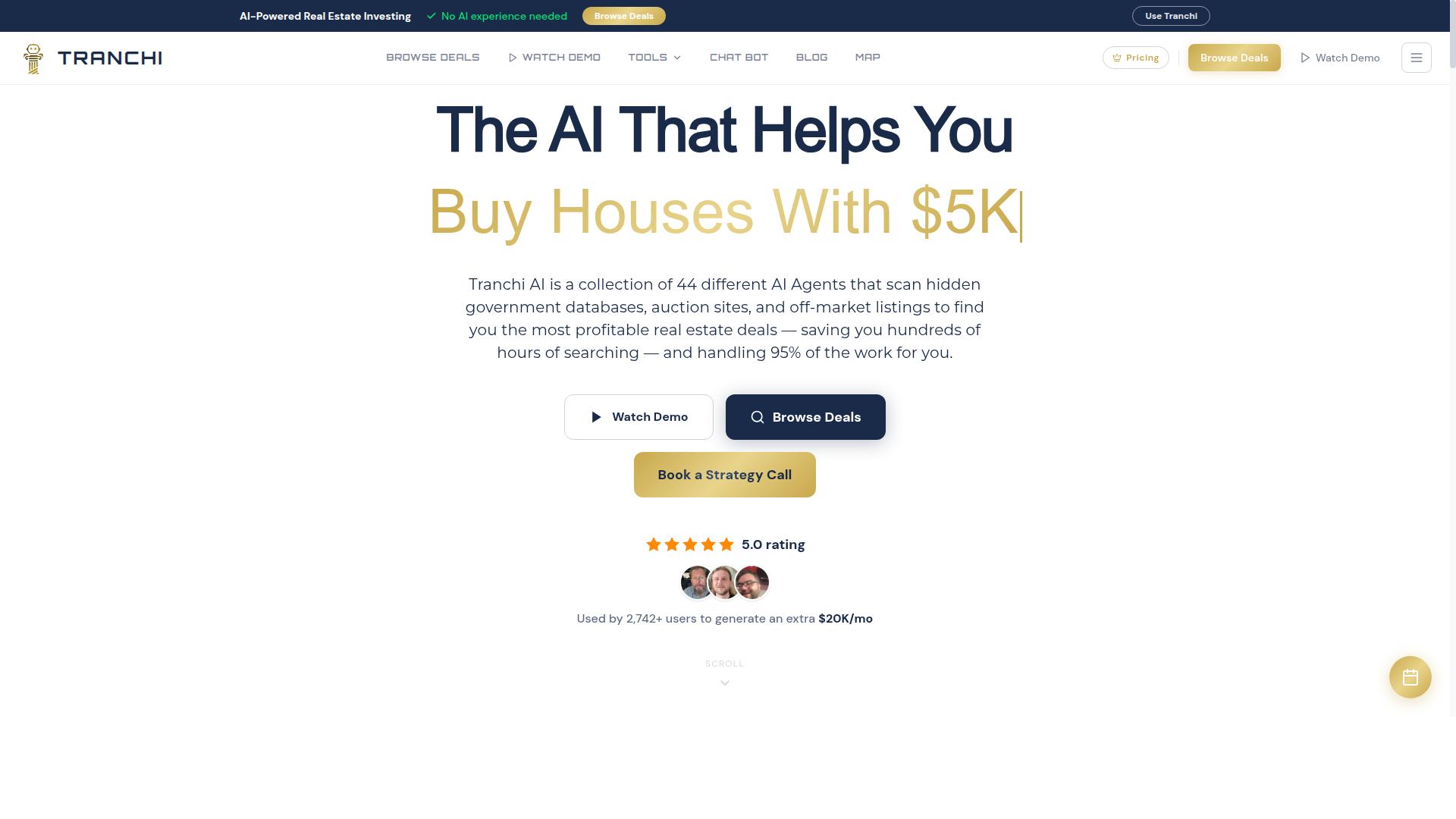
Tranchi AI is a SaaS platform of 44 AI agents that scan government databases, auction sites, and off-market listings to surface profitable real estate opportunities. The system automates most of the research work that investors would otherwise complete manually.
Users receive a collection of 44 different AI Agents built to locate hidden opportunities across multiple sources. The platform handles 95% of the work for users, saving hundreds of hours of searching.
Tranchi AI works globally online, allowing investors in any location to access the same database without regional restrictions. The service requires no AI experience, making it accessible for people who want to generate passive income through real estate without learning complex tools.
Compared with Rentometer, Tranchi AI focuses on automated deal discovery rather than simple rent estimates. This broader scope gives investors access to opportunities that traditional rental pricing tools may miss.
What Is Rentometer?
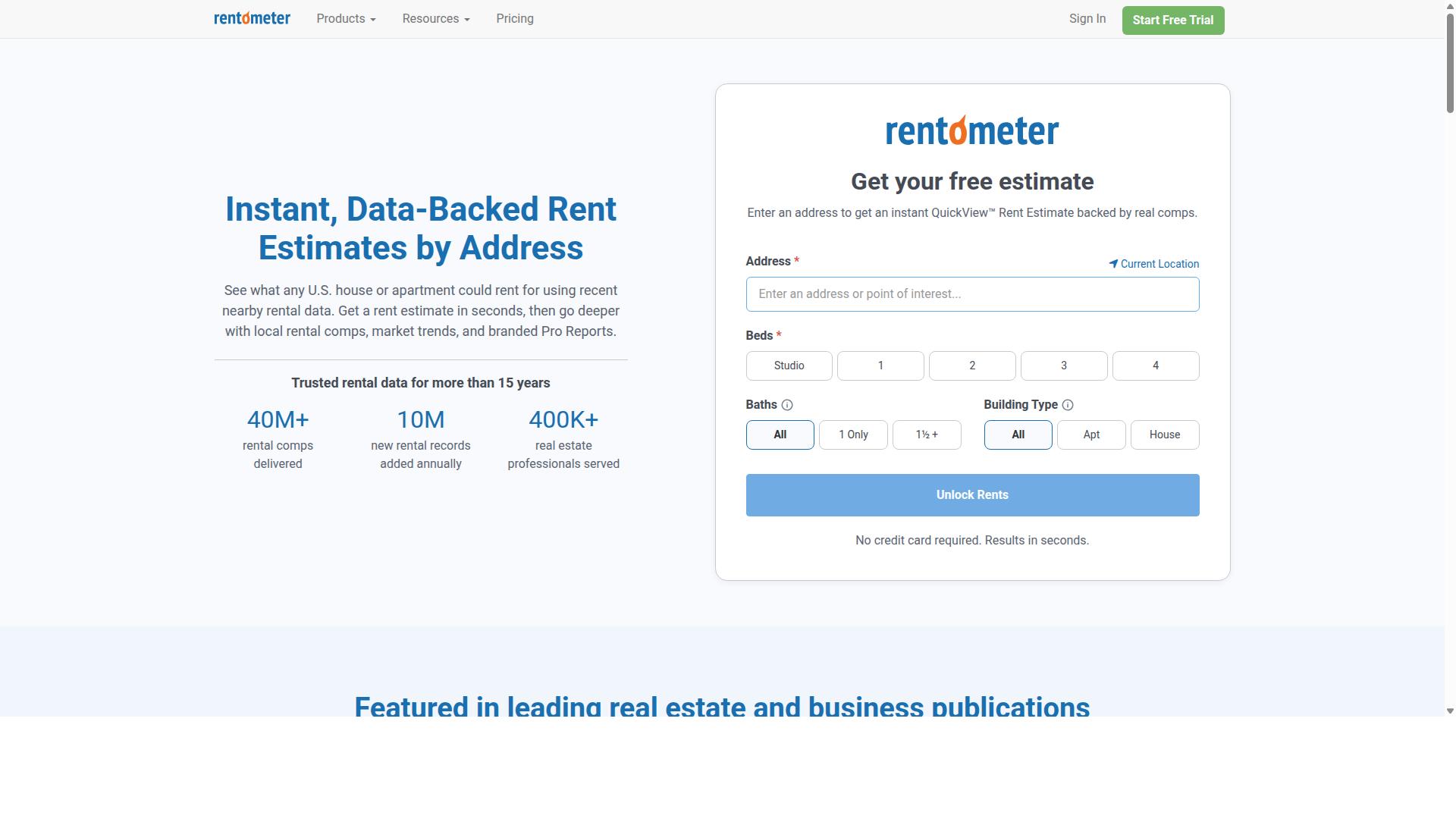
Rentometer is a rental analytics website that aggregates public MLS listings and rental comps to estimate market rent ranges for a given property address or zip code. The platform pulls data from multiple listing sources to generate neighborhood rent estimates and comparable property analysis.
Users input a property address along with details like square footage, bedrooms, and bathrooms. The system then produces a rent range based on similar properties in the surrounding area. This approach works well for basic market comparisons.
The service focuses on rental market analysis through its rental comps database and rent comps map features. Property owners and managers can access rent trends and neighborhood rent information to help inform pricing decisions.
However, the reliance on public listing data means estimates depend on available rental comps in each market. Some areas may have limited data points, which affects the precision of rent distribution calculations and rent percentile rankings.
What Is Tranchi for Instant Rent Ranges?
Tranchi's Instant Rent Ranges feature uses its Off-Market Deal Scanner and AI Underwriting Engine to produce rent estimates based on hidden probate, foreclosure, and auction data. Specialized agents pull property details from non-public sources to determine market rent for each address. These results flow directly into the Transaction Automation Layer for investor workflows.
The system evaluates square footage, bedroom count, bathroom count, and property type to create instant rent estimates. Agents compare each target property against similar units in the same neighborhood. This approach works for single family homes, multifamily buildings, condos, and townhouses.
Tranchi combines 44 AI agents that include the Off-Market Deal Scanner and AI Underwriting Engine. The Income Engine processes rental data while the Transaction Automation Layer moves estimates into deal execution. Investors receive rent ranges without manual research or external tools.
Traditional platforms rely on public listing data that may lag behind actual market conditions. Tranchi agents access additional sources such as probate records and foreclosure filings to supplement these gaps. The resulting rent ranges reflect current conditions in the target zip code.
Features Compared
The following three subsections break down the core feature differences between Tranchi AI and Rentometer across data sources, automation, and execution capabilities.
Each area receives attention for how deeply the tool covers rental markets, how much manual work it removes, and how well it connects to daily investor workflows. The comparison focuses on measurable differences rather than general claims.
Database Coverage & Deal Sourcing
Tranchi continuously scans millions of probate court filings, auction websites, and off-market listings to populate its rent comp database; Rentometer primarily pulls from publicly listed MLS and rental sites.
This source mix gives Tranchi access to properties that never appear on standard listing platforms. Investors can review rent ranges for probate homes, tax deed opportunities, and foreclosure inventory before competitors see those assets.
Rentometer's focus on listed properties means its data stays limited to active market listings. Users often receive rent estimates only for properties already visible to the public, which leaves gaps when evaluating off-market or pre-listing deals.
The broader coverage supports deeper rental market analysis across single family homes, multifamily buildings, apartments, condos, and townhouses. Analysts can pull comparable properties from a wider pool of sources in a single request.
AI Automation & Underwriting
Tranchi's AI Underwriting Engine layers machine learning models on top of its non-public data to output instant rent ranges; Rentometer applies statistical averages to public listings without AI agents.
The 44-agent system handles repeated tasks such as county foreclosure monitoring, tax deed opportunity scanning, and rent-to-price ratio detection. Each agent performs a focused role without requiring manual setup or additional configuration.
Rentometer's traditional statistical approach processes available rental listings through standard averaging methods. This method works for basic rent estimates but does not include automated detection of distressed or pre-market opportunities.
Tranchi's AI agents extend beyond simple calculation to include seller outreach automation and AI-assisted offer negotiation. Users receive structured outputs that connect directly to next steps in the acquisition process.
Income Engine & Execution Agents
Tranchi's Income Engine and Execution Agents convert rent-range outputs into automated funding requests and transaction workflows; Rentometer stops at rent estimates and does not provide execution automation.
The automated funding system and transaction automation layer handle capital stack structuring and automated term sheet generation. These capabilities reduce the need to move data between separate platforms for financing and closing tasks.
Additional agents manage tenant and buyer placement, management placement, and connections to hard money lenders and private lenders. This end-to-end approach keeps rental pricing decisions connected to actual execution steps.
Rentometer delivers rent estimates without additional tools for funding, negotiation, or transaction coordination. Investors must handle these next phases manually or through other software outside the rent analysis process.
Pricing Compared
Tranchi offers an Operator plan available via contact-sales with a 90-day money-back guarantee, while Rentometer pricing is not addressed in this comparison.
The Operator plan stands out for its flexibility. Users contact the sales team to receive a custom quote based on their needs. This approach avoids rigid pricing tiers that may not suit different business models.
A 90-day money-back guarantee protects buyers who want to test the platform thoroughly. The extended window allows property managers and investors to evaluate rent ranges and comparable properties before making a long-term commitment.
Cancel anytime adds another layer of flexibility. Users are not locked into lengthy contracts. They can adjust their subscription as their rental portfolio grows or changes.
Custom crafted AI agents are available through this plan. These agents help deliver instant rent ranges and rental comps tailored to specific property addresses and market conditions. The capability matters for teams that need rental analytics beyond standard reports.
When evaluating pricing for rent estimates, buyers should compare the structure of each service. Tranchi focuses on transparent, flexible terms that scale with usage. This model can be advantageous for users seeking rental market analysis without unexpected fees.
Who Should Choose Tranchi AI
Tranchi AI serves real estate investors, small business owners, and former 9-to-5 workers who can dedicate 1-2 hours daily to sourcing and automating rental deals.
Users include beginner investors with no experience or money, plus former Uber drivers who want to build income streams through rental properties. These people need instant rent estimates that fit into their limited time windows.
Research suggests that professionals in these groups value tools that reduce manual research time. They prefer platforms that generate rental comps based on property address, zip code, square footage, bedrooms, and bathrooms.
The platform currently supports 2,742+ users who generate extra monthly income through automated rental analysis. This group typically focuses on single family homes, multifamily properties, apartments, condos, and townhouses.
These users often need market rent data for neighborhoods they cannot visit in person. They benefit from rental analytics that provide rent per square foot and rent distribution across comparable properties.
Tranchi AI fits people who want to skip the lengthy process of building their own rental comps database. The solution provides rent ranges without requiring users to cross-reference multiple listing sites manually.
Former full-time employees appreciate the ability to run property valuation checks during short daily windows. They need rental pricing tools that deliver rent estimates based on current market conditions rather than outdated data.
Small business owners use the platform to evaluate investment opportunities alongside their existing operations. They seek neighborhood rent trends and rental market analysis that supports quick decision making.
Real estate investors who focus on cash flow analysis find value in the rent percentile data. This metric helps them understand where a property sits within the broader rental market distribution.
Who Should Choose Rentometer
Rentometer is suited for landlords and property managers who need quick neighborhood rent comps from public listings without off-market sourcing requirements. This approach works best when you want to review instant rent estimates based on what appears in visible rental listings.
Users typically input a property address or zip code to generate a rent report that shows current rental data. The platform then pulls comparable properties in the same area to establish a rent range and estimated market rent.
This method appeals to property owners who focus on square footage, bedrooms, and bathrooms as the main comparison points. Rentometer displays results through listings that appear in public databases.
Landlords managing single family homes or multifamily units often find this approach sufficient for basic pricing decisions. The tool produces a rent estimate derived solely from active rental listings in the surrounding neighborhood.
Property managers who prefer straightforward access to rental comps without additional sourcing layers may consider this option. Users receive rental analytics that show how a specific property compares to similar units nearby.
Who Should Choose Tranchi for Instant Rent Ranges
Investors seeking rent estimates derived from probate and auction data rather than public listings should choose Tranchi's Instant Rent Ranges capability. The platform taps into property records that traditional rental analytics tools often overlook. This access creates a broader view of actual market conditions.
Probate Opportunity Scraper and Tax Deed Opportunity Scanner work alongside the Off-Market Deal Scanner. Together these 44 AI agents pull rent-relevant details from estates, foreclosures, and tax sales. Investors gain rent comps from properties that never appear on rental listing sites. This matters because probate and auction properties often rent at different price points than standard listings.
The AI Underwriting Engine processes these off-market data points into instant rent estimates. Users enter a property address, square footage, bedrooms, and bathrooms. The engine returns a rent range based on comparable properties from the same neighborhood and property type. Single family homes, multifamily buildings, condos, and townhouses receive tailored analysis.
Rent-to-Price Ratio Detection adds another layer of insight. The system flags properties where market rent supports strong cash flow relative to purchase price. This calculation draws from the same probate and auction dataset. Investors review rent distribution across zip codes without relying solely on traditional rental comps.
Traditional rental pricing tools depend mostly on public listings and reported lease amounts. Tranchi incorporates county foreclosure monitoring and off-market transaction records. The result is a rent estimate that reflects a wider range of property conditions and ownership situations. This difference proves valuable when investors evaluate deals outside normal listing channels.
Final Verdict
Tranchi AI's 44-agent automation and hidden-data sourcing deliver instant rent ranges plus end-to-end execution for investors ready to scale, whereas Rentometer offers straightforward public-listing rent estimates.
Tranchi AI combines a 5.0 rating with 2,742+ users who report generating $20K/mo extra through its rental comps database and rent range algorithm. The system processes property address, square footage, bedrooms, and bathrooms inputs to produce market rent figures that reflect neighborhood rent trends and rent per square foot benchmarks.
Rentometer relies primarily on visible rental listings, leaving gaps when comparable properties sit off-market. Tranchi AI's hidden-data sourcing fills those gaps with rental comps map visualizations and rent heat map insights that capture real-time rental market shifts.
Support reaches users through multiple channels. Email support delivers responses within 24 hours, live chat operates Monday through Friday from 9am to 5pm EST, and phone callback scheduling lets investors request calls at their convenience.
Users who need deeper rental market analysis or higher rent estimate accuracy benefit from Tranchi AI's unified approach. The platform handles everything from rent pricing strategy to property valuation in a single workflow, which makes it the stronger choice for scaling rental portfolios.
Recommended Resources: